
communication skills
Communication is derived from the Latin word commūnicāre, meaning “to share.”. It is an essential life skill required to interact effectively with people, customers, and stakeholders in a business environment.
1. The Communication Process and Elements
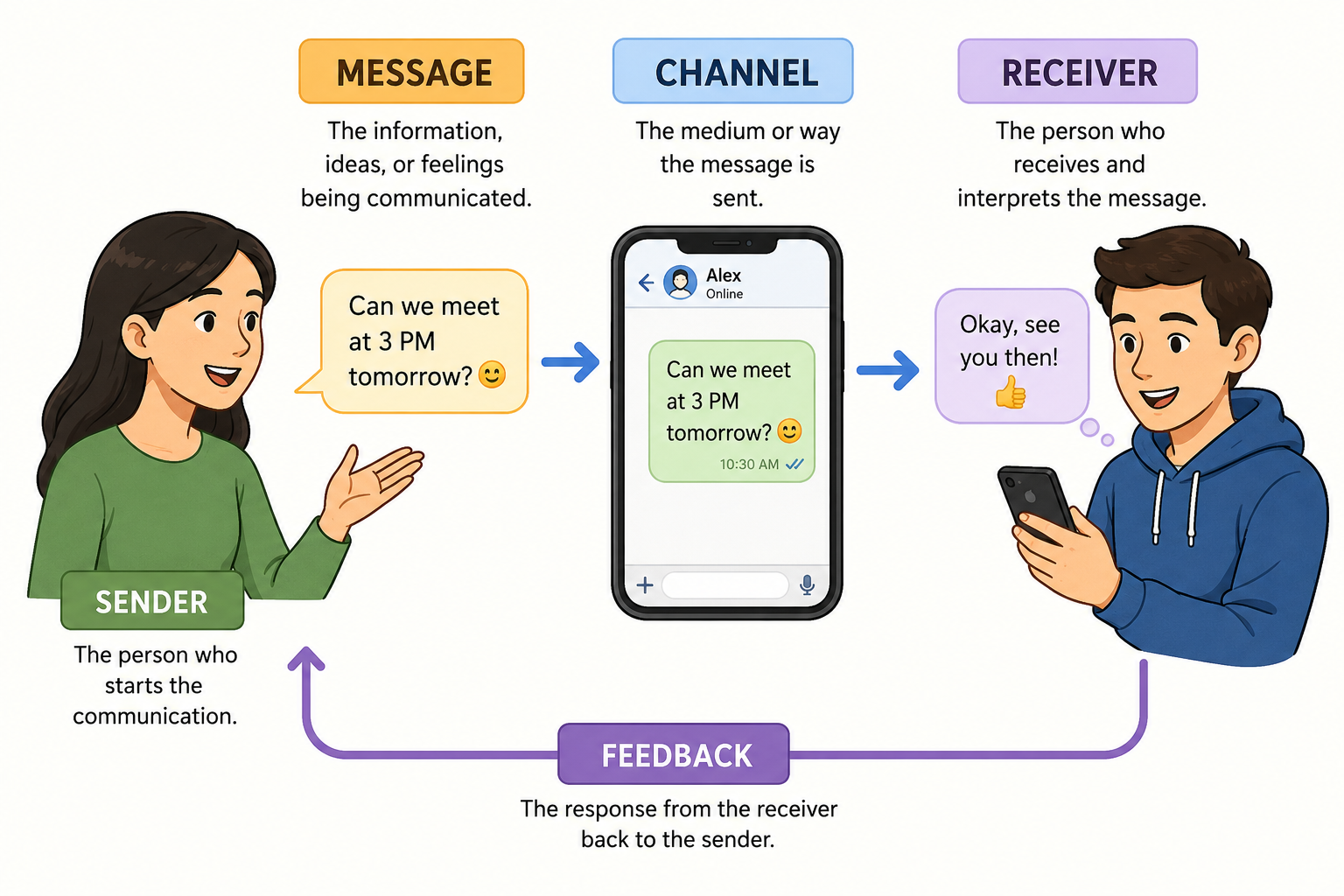
Communication is complete only when the receiver understands the message in its entirety. The process consists of three main parts: Transmitting (sender sends the message), Listening (receiver understands it), and Feedback (receiver conveys their understanding).
The five key elements of the communication cycle include:
- Sender: The person beginning the communication.
- Message: The information the sender wants to convey.
- Channel: The medium (speaking, writing, etc.) used to send the information.
- Receiver: The person to whom the message is sent.
- Feedback: The receiver’s acknowledgement and response.
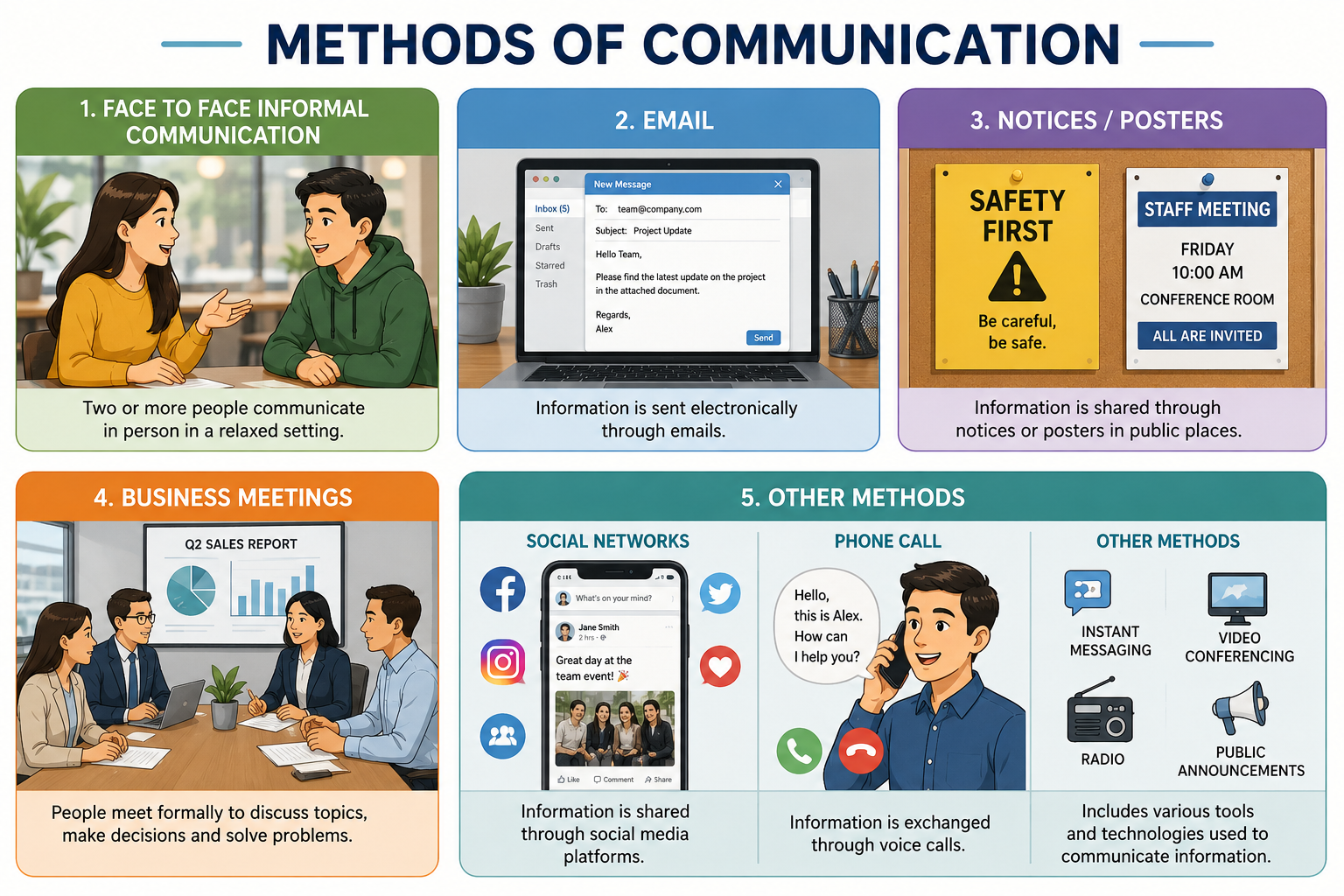
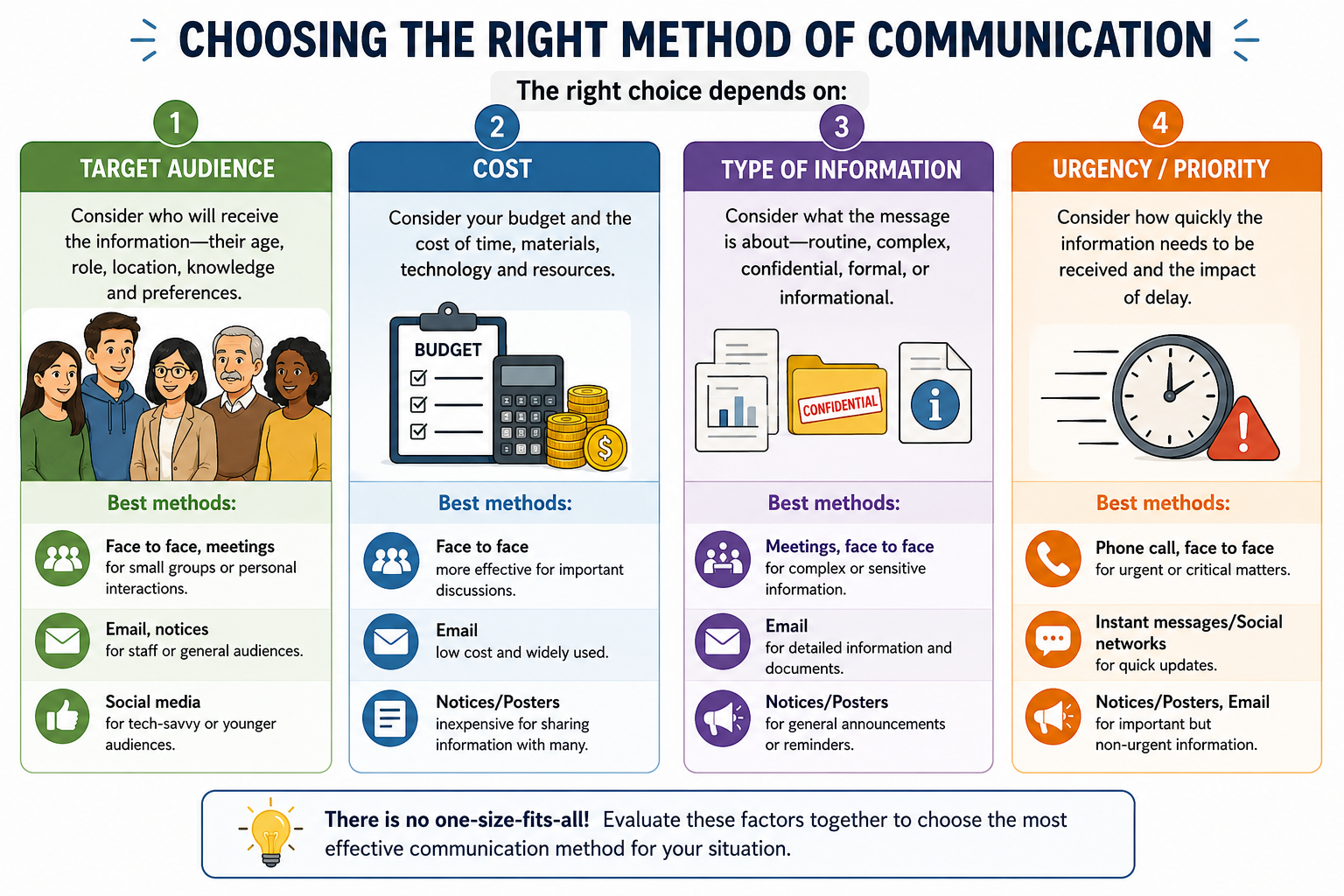
2. Methods of Communication
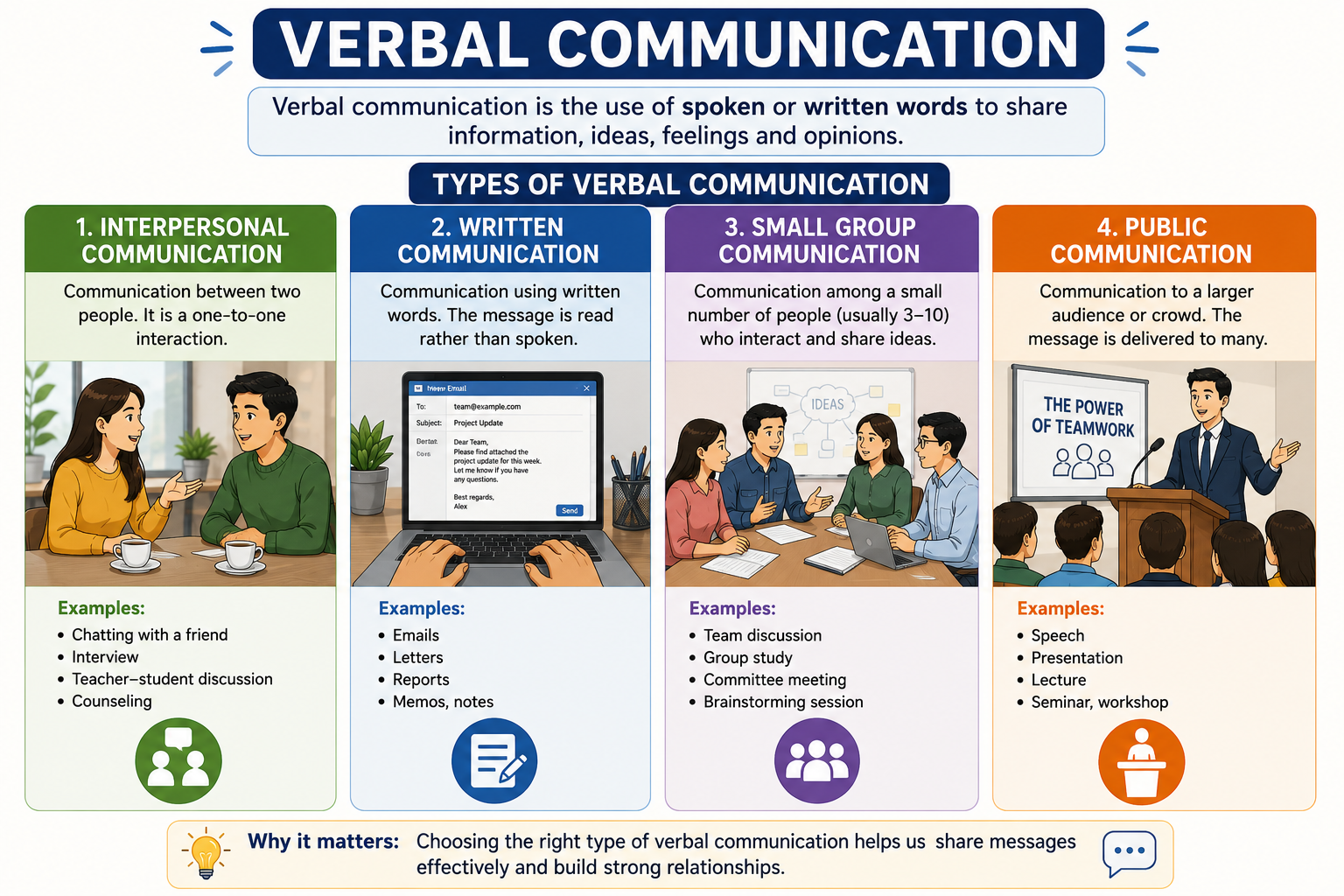
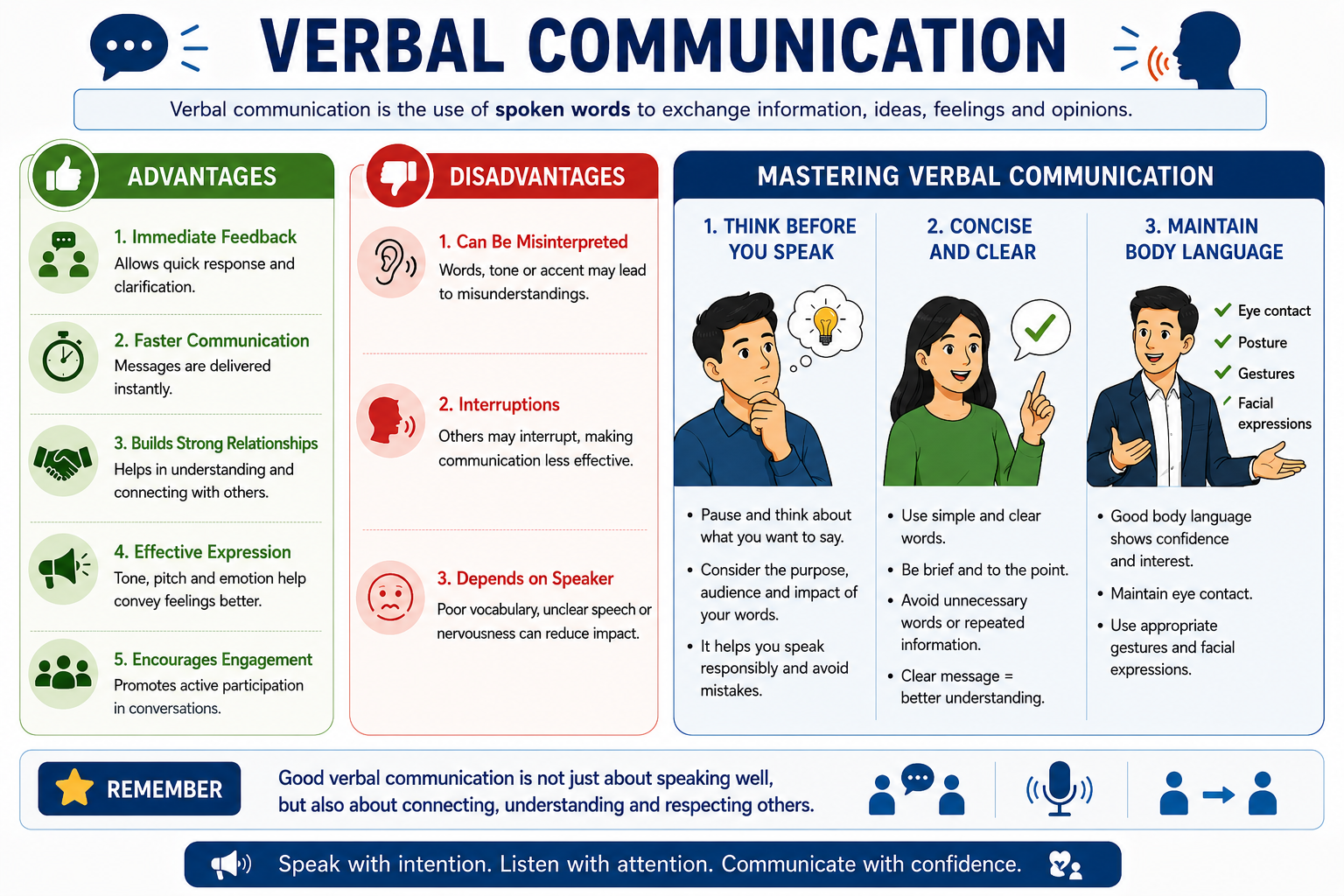
A. Verbal Communication This involves sounds, words, language, and speech.
- Forms:
- Interpersonal: One-on-one conversations (e.g., two friends talking).
- Written: Using written words (e.g., e-mails, letters, SMS).
- Small Group: Conversations involving more than two people (e.g., board meetings).
- Public: One individual addressing a large gathering (e.g., public speeches).
- Mastering Verbal Skills: One should think before speaking, be concise and clear, and maintain confidence and positive body language.
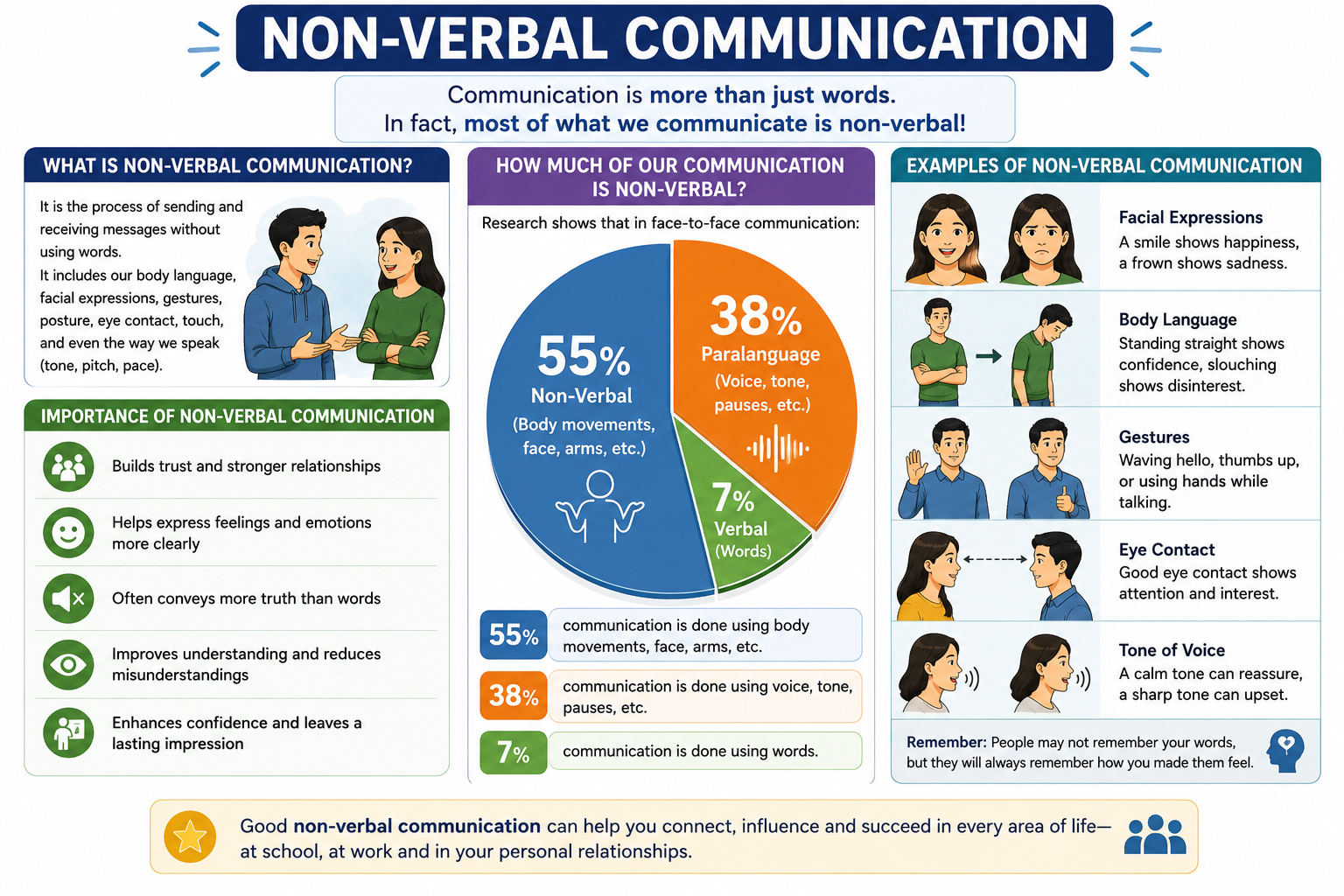
B. Non-Verbal Communication Exchanging information without words through signals like gestures, expressions, and posture. Interestingly, 93% of communication is non-verbal (55% body movements/face, 38% voice tone/pauses, and only 7% words).
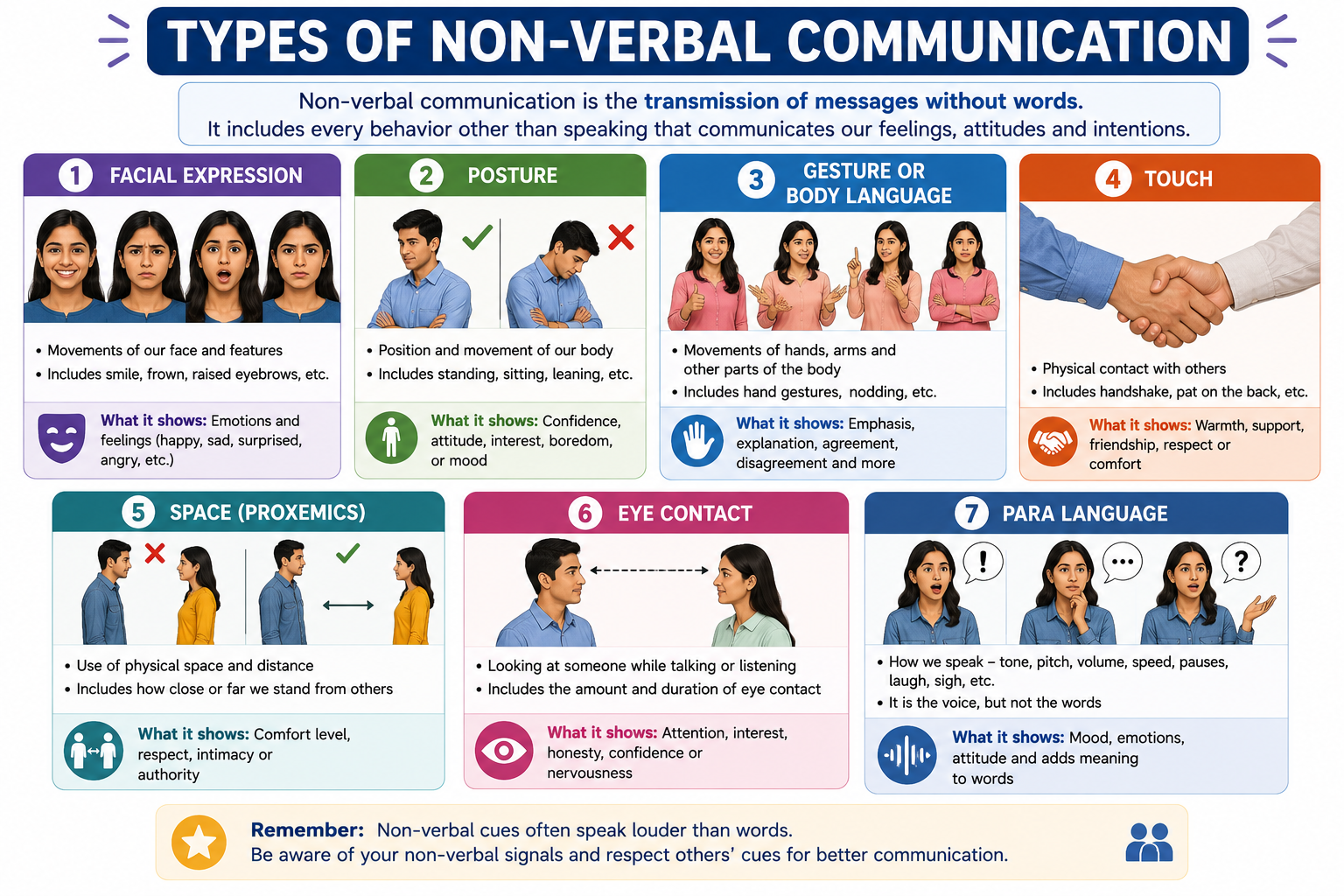
- Key Types:
- Facial Expressions: Showing feelings like happiness or anger.
- Posture: Showing confidence (straight) or weakness (slumped).
- Gestures: Body movements like raising a hand or nodding.
- Paralanguage: The tone, speed, and volume of the voice.
- Other factors: Touch, space (physical distance), and eye contact.
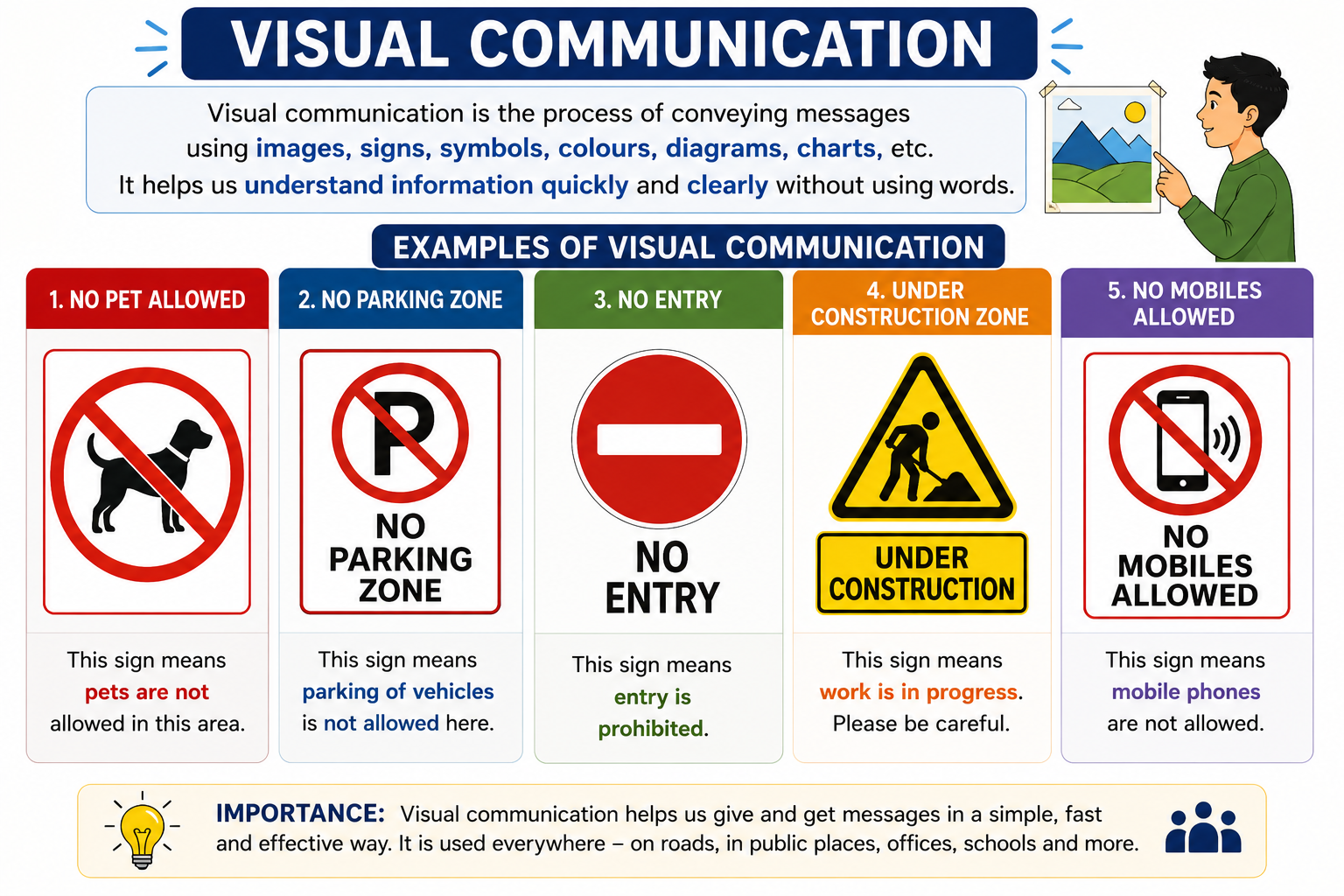
C. Visual Communication Exchanging messages through images or pictures. It is effective because it does not require knowledge of a specific language to understand (e.g., “No Parking” signs, “Danger” warnings).
3. Feedback in Communication
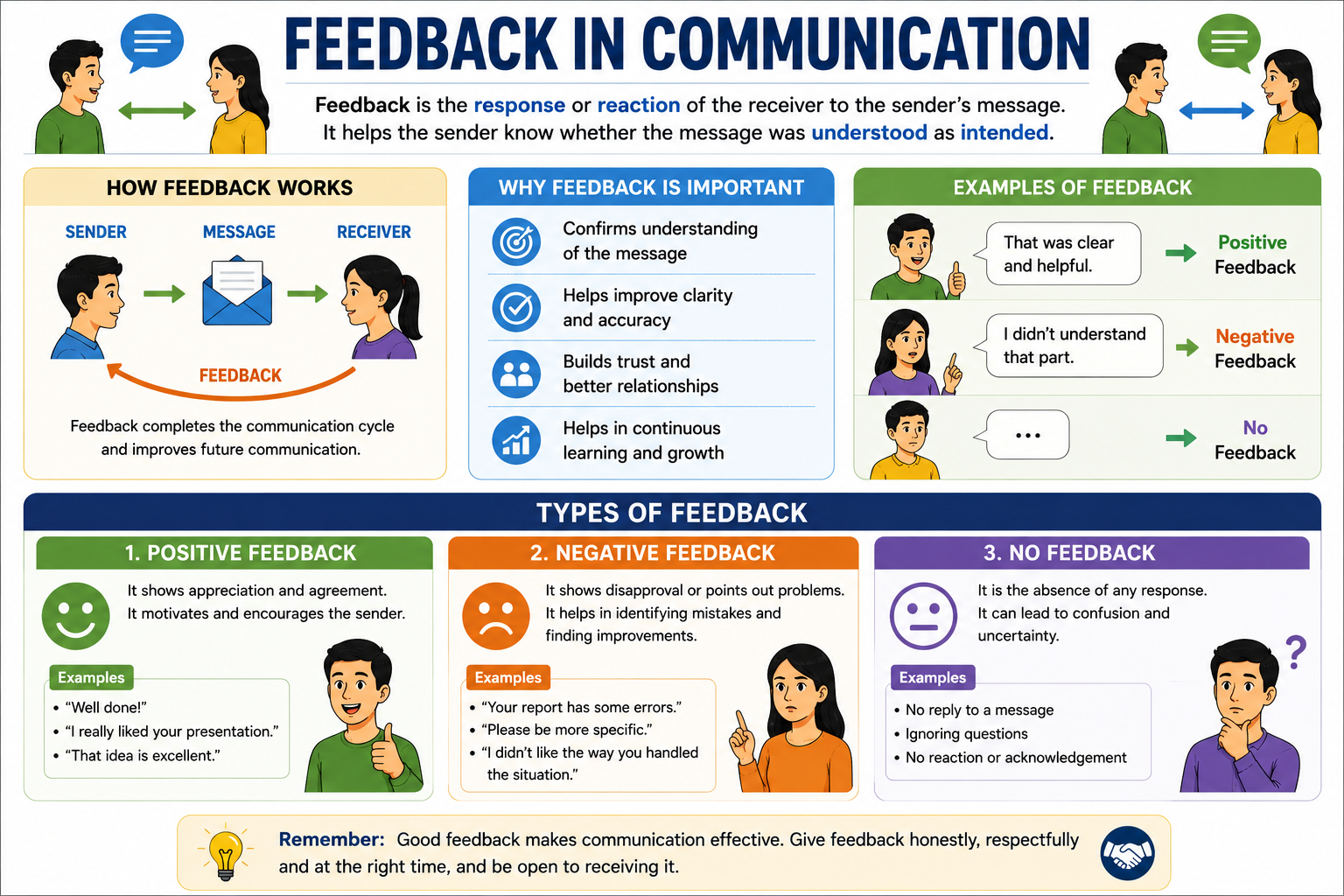
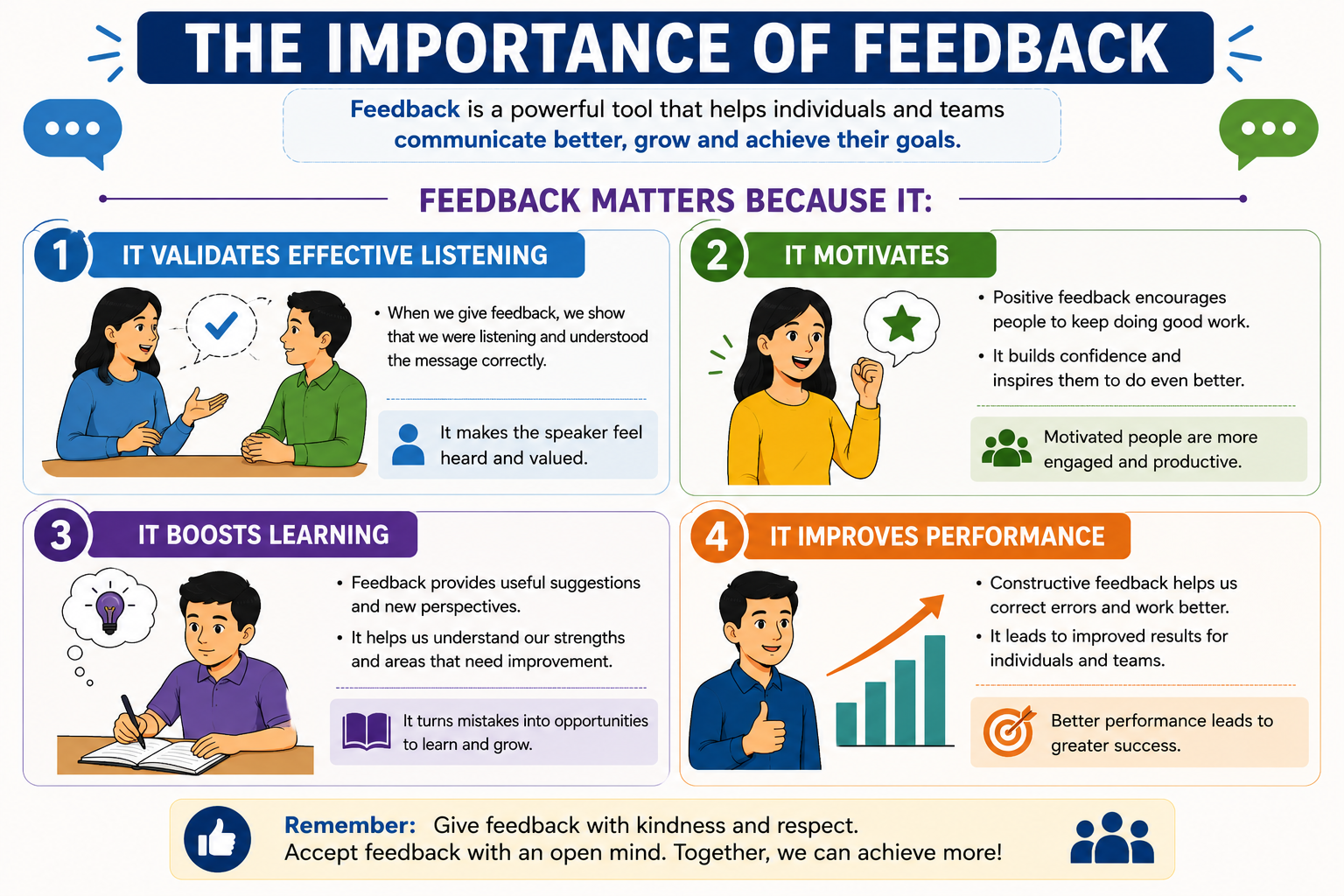
Feedback is the response given by the receiver and is vital to ensure the message was understood.
- Types: Positive (appreciating good work), Negative (pointing out errors), and No Feedback (which may indicate disagreement).
- Characteristics of Good Feedback: It must be specific (avoiding general comments), timely, polite, and offer continuing support.
4. Effective Communication and its Barriers
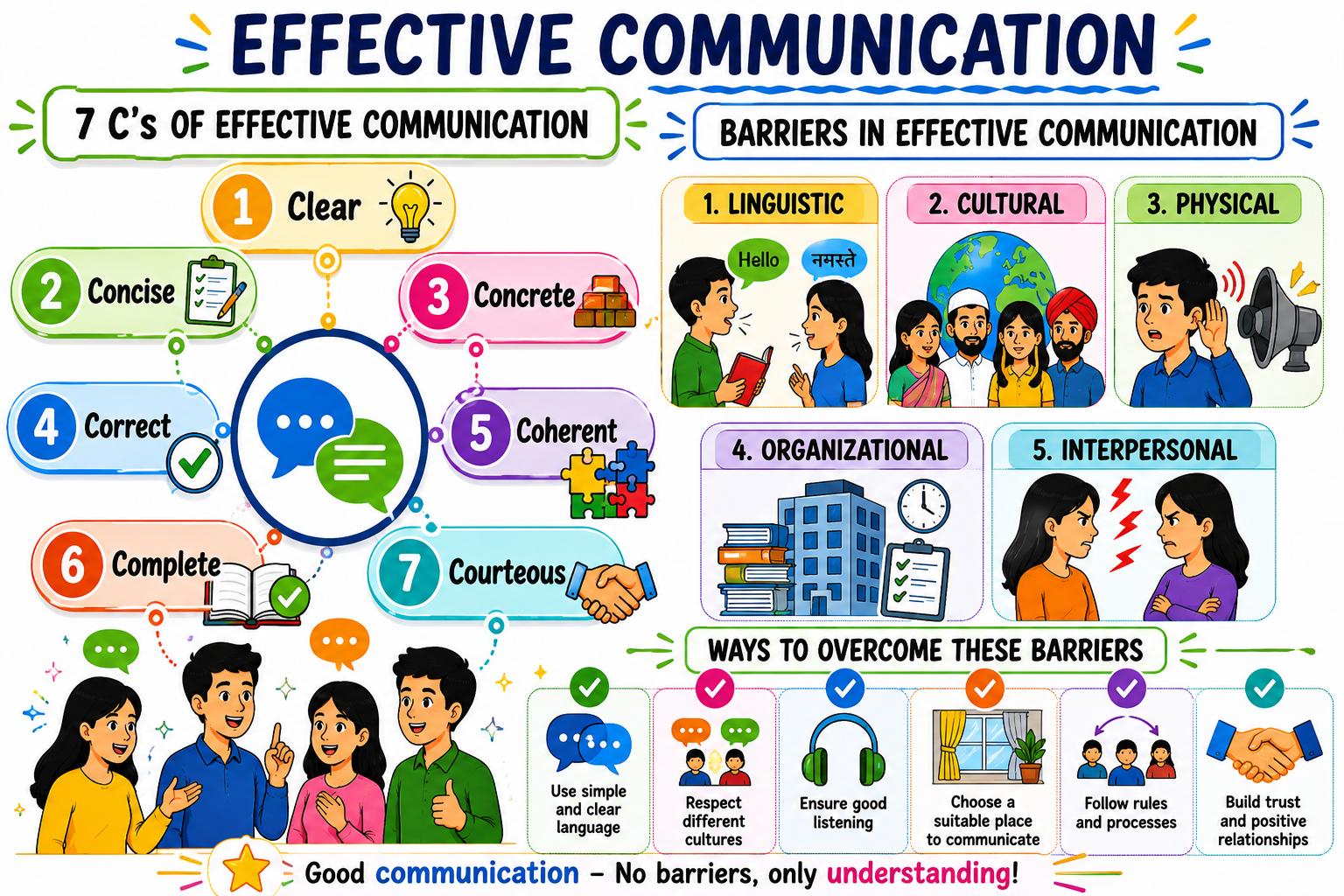
Effective communication follows the 7 Cs: Clear, Concise, Concrete, Correct, Coherent, Complete, and Courteous.
Common Barriers include:
- Physical: Environmental conditions or not being able to see body language (e.g., text vs. face-to-face).
- Linguistic: Misunderstandings due to slang, jargon, or different languages.
- Interpersonal: Stage fear, lack of will to talk, or personal differences.
- Organisational: Rigid hierarchical structures or strict rules.
- Cultural: Difficulty understanding different customs or stereotypical assumptions.
5. Writing Skills
A. Basic Rules
- Capitalisation (TINS): Capitalise Titles (Dr., Mr.), the word “I,” Names (people, places, days, months), and the Starting letter of sentences.
- Punctuation: Use full stops (.), commas (,), question marks (?), exclamation marks (!), and apostrophes (‘) to separate parts of sentences for clarity.
B. Parts of Speech The function of a word in a sentence is determined by its part of speech:
- Main Parts: Nouns (naming words), Pronouns (replace nouns), Adjectives (describe words), Verbs (action words), and Adverbs (describe how/when an action is done).
- Supporting Parts: Articles (a, an, the), Conjunctions (join words/phrases), Prepositions (connect words to show location/time), and Interjections (express strong emotions).
C. Sentence Structure A sentence is a group of words communicating a complete thought.
- Components: Subject (performs action), Verb (the action), and Object (receives action).
- Active vs. Passive Voice: In Active Voice, the subject does the action (e.g., “He is reading a book”). In Passive Voice, the subject receives the action (e.g., “A book is being read by him”).
- Sentence Types: Declarative (statement), Interrogative (question), Exclamatory (reaction/emotion), and Imperative (order/request).
- Paragraphs: A group of sentences organized around a common idea or theme.